

Symbols
of the Apostles
The Symbols of the Twelve Apostles are one way the church has passed on the faith. Their lives inspire us to follow in the footsteps of Christ. We imitate them in the same way that they imitated Christ. The church assists us in remembering their stories by assigning Symbols of the Apostles, and the symbols remind us of that disciple’s life. They are a church treasure that allows us to learn more about our history.


The symbols of the ApostlesUntersuchen wir die Symbole, die die Kirche den zwölf Aposteln verliehen hat, und sehen wir, wie sie zu unserem Verständnis unseres Glaubens beitragen. Die Symbole der 12 Apostel sind ein Weg, wie die Kirche den Glauben weitergibt. Ihr Leben inspiriert uns, in die Fußstapfen Christi zu treten. Wir ahmen sie genauso nach, wie sie Christus nachgeahmt haben.
- Apostel Petrus (Zwei gekreuzte Schlüssel)
- Apostel Andreas (Fisch auf einem Kreuzsaltar)
- Apostel Jakobus der Größere (Stalt und Jakobsmuschel)
- Apostel Johannes (Schlange im Kelch)
- Apostel Philippus (Korb, Kreuz und Speer)
- Apostel Bartholomäus (Bibel und ein Messer)
- Apostel Matthäus (3 Geldsäcke)
- Apostel Thomas (Zimmermannsquadrat, Felsen, Pfeil und Speer)
- Apostel James The Less (Steine und Säge)
- Apostel Simon (Fisch auf einer Bibel)
- Apostel Judas Schiff (vermutlich ein Fischer), Stab (Missionar, Pilger), Quadratherrschaft)
- Apostel Matthias (Bibel und Krummsäbel)
- Zusammenfassung Symbole der Apostel
- FAQ: The Twelve Apostles
- Ressourcen Symbole der Apostel
The church assists us in remembering their stories by assigning symbols to each of the apostles, and the symbols remind us of that disciple’s life. They are a church treasure that allows us to learn more about our history. Let us investigate the symbols that the church bestowed upon the twelve apostles and see how they aid in our understanding of our faith. You will see that many of the symbols give clues to how the Apostles died.
Let us dive into the Symbols of the Apostles with explanations. Find the catholic saints’ symbol images for each apostle.

Emblem Saint PeterApostel Petrus (Zwei gekreuzte Schlüssel)
Das Emblem des Petrus zeigt zwei gekreuzte Schlüssel, die das grundlegende Glaubensbekenntnis der Kirche darstellen:
“You are the true Christ, the Son of the living God” (Matthew 16:16).
Jeder, der den gleichen Glauben besitzt wieDer heilige Petrus expressed so clearly and firmly has the keys to entering the Realm of God. The inverted cross represents how, during his crucifixion, Peter asked that his head be placed where his Master’s feet were nailed
Saint Peter Quick Fact: answered Jesus that he was Christ, the son of the living God. He is the rock upon which Jesus would build his Church

Saint Andrew LogoApostel Andreas (Fisch auf einem Kreuzsaltar)
Heiliger Andreasbegleitete seinen Bruder Petrus zu Jesus. Der Fisch verrät, dass er von seiner früheren Tätigkeit alsFischerzu seiner größeren Berufung als Fischer der Menschheit.
The saltire cross, also known as St. Andrew’s Cross, is the traditional form of the cross on which he was crucified after Verkündigung des Evangeliums in Greece.
Saint Andrew Quick Fact: Andrew was Peter’s brother, brought him to Jesus Christ & he recognized Christ at first sight.

Emblem Saint James the GreaterApostel Jakobus der Größere (Stalt und Jakobsmuschel)
In seiner Predigt und LehreJakobus der Großeviel gelaufen. Der Pfahl, der auf seinem Wappen zu sehen ist, wurde bei seinen Wallfahrten verwendet.
Die ausgestellte Jakobsmuschel war ein einfaches Gericht mit zahlreichen Anwendungen. König Herodes exekutierte James mit einem Schwert, das den Stab zu durchqueren scheint. James war so aktiv und mutig, dass sein Ankläger sogar nach seinem Tod zum Christentum konvertierte.
Saint James the Greater Quick Fact: part of the prominent group (Peter, James, John). He was present at Jairus’ daughter’s rising, transfiguration, and the Agony in the Garden.

Emblem Saint JohnApostel Johannes (Schlange im Kelch)
Der Legende nach wurde Johannes mit Gift in seinen Kelch getötet.St. Johannes was the only one of the 12 to live to a ripe old age and die naturally. He is remembered as a beloved disciple who was close to Jesus and who looked after Jesus’ mother,
Saint John Quick Fact: was the first to see the grave & believe Jesus had risen, one of the 7 disciples who saw Jesus at the shore. His close relationship with God earned him the name “the disciple whom Jesus loved”.

Symbol Saint PhilipApostel Philippus (Korb, Kreuz und Speer)
Der Korb inSaint Philip'sEmblem stellt die Ernährung der Menge dar, die ihm ein wichtiges Anliegen war.
Das Tau-Kreuz und der Speer repräsentieren die Art und Weise, wie er sein Leben für Ihn hingab, der das Brot des Lebens ist.
Saint Philip Quick Fact: a disciple of John the Baptist, one of the Apostles. Mentioned only in New Testament in John, called by Jesus and brought Nathaniel/Bartholomew.

Symbol Saint BartholomewApostel Bartholomäus (Bibel und ein Messer)
The Bible and a flaying knife are signs of Heiliger Bartholomäus. Er hatte festen Glauben an das Wort Gottes, das er frei predigte. Er begegnete seinem Martyrium, indem er warLebendig gesagt.
Saint Bartholomew Quick Fact: also known as Nathaniel, converted Polymius to the King of Armenia.

Emblem Saint MatthewApostel Matthäus (3 Geldsäcke)
Das Emblem fürSankt Matthäus, the former tax collector, depicts three purses, a nod to his previous occupation
Die Streitaxt, mit der er getötet wurde, ist ebenfalls abgebildet.
Apostle Matthew Quick Fact: invited Jesus for supper at his house with sinners and tax collectors, “I came not to call the just, but sinners.

Symbol of Saint ThomasApostel Thomas (Zimmermannsquadrat, Felsen, Pfeil und Speer)
Heiliger Thomas's Emblem enthält einen Zimmermannswinkel.
Der Legende nach baute er in Indien eine Kirche, während er dort seinen Dienst ausübte. Auch die abgebildeten Felsen, Pfeile und Speere erzählen die Geschichte eines schmerzhaften, aber tapferen Todes.
Saint Thomas Quick Fact: known as doubting Thomas.

Apostel James The Less (Steine und Säge)
Jakobus der Kleinewar ein Bruder von Jesus.
Obwohl aufgrund seiner zurückgezogenen Natur wenig über ihn bekannt ist, ist bekannt, dass er in ganz Jerusalem predigte, bis er zu Tode gesteinigt und sein Körper zersägt wurde, daher die Steine und die Säge auf seinem Emblem.
Saint James the Less Quick Fact: author of the first Catholic epistle, son of Alphaeus and Mary, brother of the Lord, a witness of Resurrection, pillar of the Church.

Symbol Saint SimonApostel Simon (Fisch auf einer Bibel)
Heiliger Simon der Zelotwar der inspirierende Gefährte von Judas und wurde in Persien auf einer Missionsreise zum Märtyrer.
Als unermüdlicher Fischer der Menschheit durch die Kraft des Evangeliums wird Simon durch einen Fisch in einer Bibel symbolisiert.
Saint Simon the Zealot Quick Fact: he sometimes called Simon the Zealot because of his zeal for the Mosaic law.

Emblem Saint JudeApostel Judas Schiff (vermutlich ein Fischer), Stab (Missionar, Pilger), Quadratherrschaft)
Ein Schiff mit einem Kreuz auf den Segeln symbolisiert den heroischen Jude auf Missionsexpeditionen in Begleitung seines Freundes Simon.
Heiliger Judaswird manchmal als Thaddäus oder Lebbäus bezeichnet
Saint Jude Quick Fact: sought in desperate situations, letter in New. Testament, patron saint of desperate cases & hopeless causes.

Symbol Apostle MatthiasApostel Matthias (Bibel und Krummsäbel)
Die Apostel wähltenHeiliger Matthias to take the place of Judas the traitor. Matthias was well-versed in the scriptures, as evidenced by the Bible depicted in his emblem. After a fearless service as a missionary in Judea, he was beheaded with a scimitar, which is also depicted on the emblem.
Saint Matthias Quick Fact: he was with Jesus since baptism by John the Baptist. Replaced Judas the traitor (either him or Barsabas) and became associated with the eleven apostles.
Zusammenfassung Symbole der Apostel
Christen haben immer Symbole verwendet, um uns zu helfen, den Glauben zu verstehen. Wir haben eine lange Geschichte schöner Bilder mit bedeutenden Bedeutungen, und viele von uns verstehen sie nicht.
Die Symbolik der christlichen Heiligen wird seit der Gründung der Religion verwendet. Jeder Heilige soll ein vorbildliches Leben geführt haben, und Symbole wurden verwendet, um ihre Geschichten in der gesamten Kirchengeschichte zu erzählen.
Die Ikonographie ist das Studium dieser in der Kunstgeschichte. Sie wurden vor allem verwendet, um Analphabeten zu helfen, eine Szene zu erkennen und jedem der Heiligen eine Persönlichkeit in der Kunst zu verleihen.
FAQ: The Twelve Apostles
Who were the Twelve Apostles?
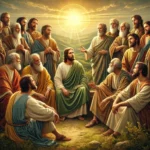
The Twelve Apostles were the primary disciples of Jesus Christ, chosen by him to preach the Gospel and establish his Church.
They played a pivotal role in the early spread of Christianity.
What are the symbols associated with each Apostle and what do they represent?

Each Apostle is traditionally associated with a symbol that reflects their life, ministry, or martyrdom. For example:
Peter: Crossed keys, symbolising the authority given to him by Jesus to lead the Church.
Andrew: Saltire cross (X-shaped), the type of cross on which he was martyred.
James the Greater: Scallop shell, a symbol of pilgrimage, as he is believed to have preached in Spain.
John: Eagle, representing his soaring theological insights in his Gospel and Revelation.
Philip: Basket of loaves, recalling his role in the feeding of the 5,000.
Bartholomew: Flaying knife, the instrument of his martyrdom.
Matthew: Three money bags, representing his former profession as a tax collector.
Thomas: Carpenter’s square, possibly symbolising his role in building the early Church.
James the Less: Fuller’s club, a tool used for beating cloth, possibly signifying his role in disciplining the early Church.
Simon the Zealot: Saw, the instrument of his martyrdom.
Jude Thaddeus: Ship, symbolising the spread of the Gospel.
Matthias: Axe or lance, representing his role as a warrior for Christ.
What are some of the key events in the lives of the Apostles?

The Apostles witnessed many significant events during Jesus’ ministry, including his miracles, teachings, crucifixion, and resurrection. After Pentecost, they were empowered by the Holy Spirit to preach the Gospel boldly. Some key events include:
Peter’s confession of Jesus as the Messiah.
James the Greater’s martyrdom by Herod.
John’s exile to the island of Patmos.
Thomas’ initial doubts about the resurrection.
Paul’s conversion and his extensive missionary journeys.
What is the significance of the “Labors of the Apostles”?

The “Labors of the Apostles” refers to the missionary journeys and work undertaken by the Apostles after Jesus’ ascension. They travelled extensively, spreading the Gospel, establishing churches, and facing persecution. These labors were instrumental in the growth of early Christianity.
Are there common names today that are derived from the Apostles?

Yes, many common names are derived from the Apostles’ names. For example:
John: Giovanni, Johannes, Ian, Evan, Ivan, Jean, Sean, Shawn.
James: Jim, Jacques, Jacob, Jakob, Seamus, Giacomo.
Joseph: Guiseppe, Iosif, Josef, Jose, Osip.
What is the role of iconography in understanding the Apostles?
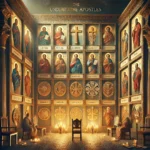
Iconography, the study of religious images and symbols, helps us to identify and understand the stories of the Apostles.
Their symbols, often depicted in art and sculpture, serve as visual reminders of their lives and ministries.
What are some resources for learning more about the Apostles?

The New Testament: The Gospels and the Acts of the Apostles provide detailed accounts of the Apostles’ lives and ministries.
Websites and online resources: Many websites offer information about the Apostles, their symbols, and their significance in Christian history.
Books and scholarly articles: Numerous books and articles delve into the history, theology, and impact of the Apostles.
Why are the Apostles still relevant today?

The Apostles’ lives serve as examples of faith, courage, and dedication to Christ. They remind us of the importance of spreading the Gospel, serving others, and remaining faithful in the face of adversity.
Their stories continue to inspire and challenge Christians today.
Ressourcen Symbole der Apostel
https://onedaysgrace.co.nz/blogs/news/symbols-of-the-12-apostles
https://quizlet.com/10956929/the-12-apostles-symbols-and-quick-facts-flash-cards/
https://ourlordstyle.com/blogs/christian-writings/classic-christian-symbols-and-their-meanings-the-twelve-apostles