

Saint Matthew
Apostle Matthew
Saint Matthew is widely regarded as the author of Matthew’s Gospel.
When Jesus summoned Matthew, he was a tax collector (or publican), one of the most despised professions in ancient Judaism.
On November 16, Eastern Catholics and Orthodox churches commemorate St. Matthew, as well as St. Fulvianus, a prince who is said to have converted from paganism after Matthew’s martyrdom.
The Gospel accounts of Mark and Luke, like Matthew’s, describe Jesus’ encounter with Matthew in the unexpected context of Matthew’s tax-collecting duties.
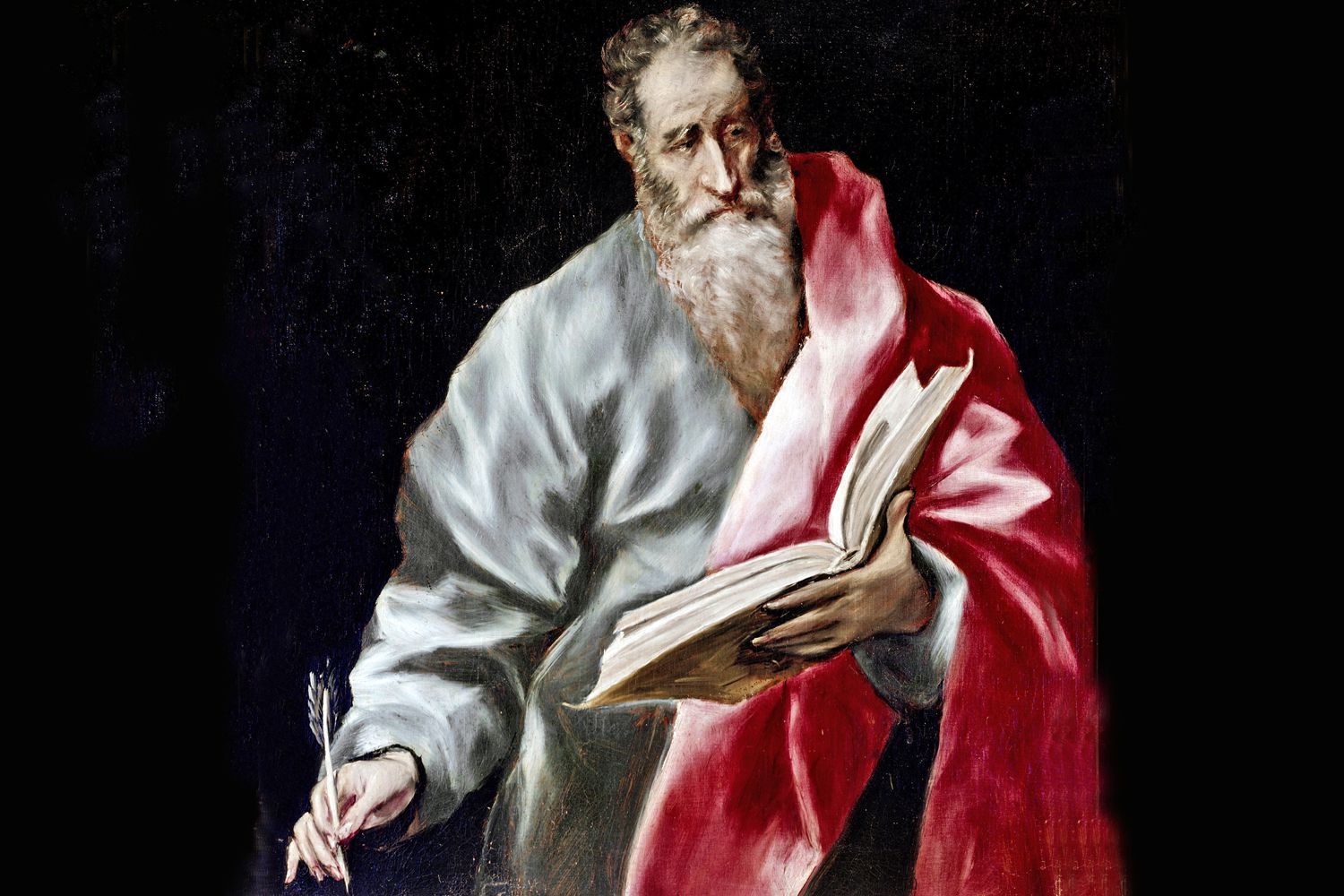
Because they worked for the occupying power and often earned their living by collecting more than the state’s due, Jewish publicans who collected taxes on behalf of the Roman rulers of first-century Judea were reviled and even hated by their communities.
Saint Matthew is a surprisingly obscure New Testament figure, with only a few mentions in the gospels. Even though the church has long held him to be the author of the Gospel of Matthew, little else is known about him.
While Matthew is remembered as a martyr, no one knows where or how he died. Various accounts claim he was beheaded, stoned, burned, or stabbed; one even claims he died naturally, as did John.
Life With Jesus
On the same day that Jesus invited Matthew to follow him, Matthew hosted a large farewell feast in his home in Capernaum, inviting his friends to meet Jesus as well. Instead of collecting taxes, Matthew began collecting souls for the kingdom of God.
Matthew, despite his sinful past, was uniquely qualified to be a disciple. He kept meticulous records and was a keen observer of people. He paid attention to the smallest details. Those characteristics came in handy when he wrote the Gospel of Matthew some 20 years later.
On the surface, Jesus’ choice of a tax collector as one of his closest followers appeared to be scandalous and offensive, given that tax collectors were widely despised by Jews.
Nonetheless, of the four Gospel writers, Matthew presented Jesus to the Jews as the long-awaited Messiah, tailoring his account to answer their questions.
Accomplishments
Matthew was one of Jesus Christ’s 12 disciples. As an eyewitness to the Savior, Matthew recorded in the Gospel of Matthew a detailed account of Jesus’ life, the story of his birth, his message, and his many deeds. He was also a missionary, spreading the gospel to other countries.
Strengths and Weaknesses
Matthew kept meticulous records. He understood the human heart and the Jewish people’s longings. He was devoted to Jesus and, once committed, never wavered in his devotion to the Lord.
Matthew, on the other hand, was a thief before he met Jesus. He considered money to be the most important thing in life and violated God’s laws to enrich himself at the expense of his countrymen.
Travels
Matthew set out to spread the message after completing his Gospel. He is thought to have visited Syria, Media, Persia, Parthia, and even Ethiopia.
According to Muslim exegesis, Saint Matthew and Saint Andrew were the two disciples who went to Ethiopia (not an African country, but a region called ‘Ethiopia’ south of the Caspian Sea) to preach God’s message.
The Gospel of Matthew
One of the facts is that Matthew’s Gospel was placed at the very beginning of the New Testament. It was thought to be the first Gospel written, but we now know that the Gospel of Mark predates it. Because it is the Gospel most concerned with Judaism, it serves as an appropriate transition from the Old Testament to the New Testament in the Christian Bible.
Matthew became the most important Gospel text for first- and second-century Christians because it contains all of the elements essential to the early church: the story of Jesus’ miraculous conception; an explanation of the importance of liturgy, law, discipleship, and teaching; and an account of Jesus’ life and death. The Gospel of Matthew has long been considered the most important of the four Gospels.
While second-century church tradition maintains that Matthew, a former tax collector and one of Jesus’ Twelve Apostles, also known as Levi, wrote the Gospel, scholars today maintain that there is no clear proof of Matthew’s authorship.
Because the Gospel of Matthew relies heavily on the earlier Gospel of Mark, as well as a late first-century oral tradition, it is unlikely that the author of the Gospel of Matthew was an eyewitness to Christ’s life.
Instead, the author was most likely a Jewish member of a learned community where study and teaching were fervent forms of piety, and the Gospel was most likely written between 80 and 90 A.D.
Shop for Saint Matthew
Looking for a patron saint to help you with your finances? Saint Matthew might be just the ticket! No matter what your financial situation is, Saint Matthew can help you get ahead. Check out our selection of Saint Matthew products like this Saint Matthew Tapestry and find the perfect one for you!
Key Takeaway
The name Matthew means God’s gift. In the story of his calling, Mark and Luke call him “Levi.” Perhaps this was his original name, and when he became a disciple, Jesus gave him a new name. It has also been proposed that he was simply a member of the Levite tribe.
What is the definition and meaning of patron saints, and why were these individuals chosen to be patrons of causes, professions, and countries?
In Christian religions, including the Roman Catholic religion, the term “Patron” refers to holy and virtuous men and women who are regarded as defenders of a specific group of people or a country. There is a patron for virtually every cause, country, profession, or special interest. St. Matthew is the patron of accountants, bankers, bookkeepers, customs officers, money managers, stockbrokers, and tax collectors.
Characteristics
This article describes the characteristics of Apostle Matthew who was a tax collector for the Roman government, which made him detestable to the Jewish religious leaders. Jesus called him away from his post, and Matthew left immediately and held a dinner at his home. Matthew became a disciple, and later Jesus chose him as one of the apostles who would be part of the church foundation with Christ as the cornerstone.
According to the Characteristics of the 12 Apostles, the name Matthew appears only five times in the Bible, but he is also called Levi. There is no specific mention of ministry by him after Acts chapter 1. However, his gospel account has some very significant details about the Lord Jesus, fulfilled prophecy, miracles and signs, and validation of Christ’s bodily resurrection. Many other unique details in Matthew’s gospel can affirm faith in Christ Jesus, the Son of God.
Reconciled with Enemies to Fulfill a Greater Purpose
Another biblical attitude or characteristic exemplified in the life of Matthew was the willingness to reconcile with enemies to fulfill a greater cause. Matthew was a tax collector and a collaborator with the hated Roman occupiers; he seemed to think that survival came through cooperation.
Another of Jesus’ chosen apostles was Simon, the Zealot who hated the Romans with a passion to the point of violence and revolution. Before he was a follower of Jesus, Simon most certainly saw Matthew as an enemy of the nation of Israel, as a treasonous traitor.
Matthew probably didn’t love Simon the Zealot too much either. Yet, he was willing to reconcile with his enemy to fulfill the greater purpose of introducing the good news of Jesus Christ to the rest of the world.
Left a Legacy to Bless Generations after Him
The characteristic exemplified by Matthew is seen in his account of Jesus’ life. Matthew wanted to leave a positive legacy. So that others after him might also believe that Jesus was the Savior of the world, he left a written record of Jesus’ life and work. Matthew left a positive legacy behind to bless the generations after him.
Conclusion Characteristics
His original name was Levi. He was the son of Alpheus, and his home was at Capernaum. His business was collecting dues and customs from persons and goods crossing the Sea of Galilee or passing along the great Damascus road, which ran along the shore between Bethsaida, Julius, and Capernaum.
Christ called him from this work to be His disciple. He appears to have been a man of wealth, for he made a great feast in his own house, perhaps to introduce his former companions and friends to Jesus. His business would tend to give him a knowledge of human nature, accurate business habits, and how to make a way to the hearts of many publicans and sinners not otherwise easily reached.
After the resurrection of Christ, he is mentioned only once in Acts, but he must have lived many years as an apostle since he was the author of the Gospel of Matthew, which was written at least twenty years later.
There is reason to believe that he remained for fifteen years in Jerusalem, after which he went as a missionary to the Persians, Parthians, and Medes. Tradition says that he died a martyr in Ethiopia.
Resources Characteristics
https://www.historicjesus.com/character/matthew.html
https://discover.hubpages.com/religion-philosophy/Biblical-Principles-of-Self-Management-Attitudes-and-Characteristics-Exemplified-in-the-Life-of-Matthew
https://www.drsharonwalt.com/i-ll-fswwrm/ec0694-characteristics-of-st-matthew
Facts and Symbols
One of the Matthew the Apostle facts is that St. Matthew, also called Levi, began following Jesus when he worked as a tax collector in Capernaum. Matthew was sitting in a tax booth, also called a customs house, and Jesus said to him, “Follow me.” Jesus immediately went to a house where he ate with tax collectors and sinners.
As you probably know, Jews did not like tax collectors, because they worked for the Roman oppressors.
They were often corrupt, too, using their position to extort money above what they were owed in taxes.
Another of the Matthew The Apostle facts is that tradition believes that Matthew wrote the Gospel of Matthew in the New Testament, which was written with a Hebrew audience in mind. Matthew’s gospel, more than any other, reminds us of the Old Testament roots and prophecies behind Jesus’ mission.
Tradition also suggests varied destinations for Matthew’s missionary journeys after Pentecost. Some say that he traveled west to Ethiopia while others claim his mission was to Persia. We believe that he died a martyr.
One legend about his death has him strung up, upside down, above a fire by Fulvia, the ruler of the Ethiopians. Matthew was unharmed by the fire, so Fulvian added more wood until the flames were very high. He commanded that 12 idols be placed around the fire, but the fire lashed out and burned them. The flames went out when Fulvian asked Matthew to pray for him, and then Matthew died.
Matthew’s symbols are bags of money, representing his profession as a tax collector before Jesus called him.
Did Matthew Write the Gospel of Matthew?
The Gospel of Matthew’s author is anonymous, but Matthew the Apostle is traditionally considered the author. The early church claimed he wrote it, and the attribution “according to Matthew” was added possibly as early as the second century. While there are credible arguments against his authorship, no alternative writer has been named.
Call to Ministry
Jesus called Levi to the Ministry, and Levi followed him. He became known as Matthew.
Matthew followed Jesus as one of his four disciples. He saw both the resurrection and ascension of Jesus, and he preached the gospel in Jerusalem.
After preaching in Judea, scholars believe he traveled to other countries to continue his preaching. Matthew supposedly authored the Gospel of Matthew, but there is no proof he wrote it. Fragments of other gospels have been found, also attributed to Matthew. These are the Gospel of the Nazarenes, the Gospel of the Ebionites, and the Gospel of the Hebrews.
Matthew was one of the early followers of Jesus. He is known as Matthew the Apostle, Saint Matthew, and his birth name of Levi
Miracles
Researching the Matthew the apostle facts then it is clear that St. Matthew went to Ethiopia and thence into the neighboring states. He began his mission at Nadabar, the capital, where he met two notorious magicians named Zaroes and Arphaxad, who, by their hellish art, caused people to become sick, after which they cured them by magic, and thus gained the reputation of performing miracles, besides which, they gathered great riches.
The apostle discovered the fraudulent means by which they deceived the credulous, and he admonished the inhabitants of the city, not to fear those two men, as he was preaching the Gospel of Jesus Christ, in whose name, all such diabolical art would be destroyed.
When the two magicians saw that they lost credit and gain by these remarks of the apostle, they endeavored by new sorcery to frighten the people; but the Saint, making their fraud public, caused himself to be greatly esteemed so that the people commenced to attend his sermons, and to take an interest in the faith he announced.
The many miracles which Matthew performed at length opened the eyes of the blind pagans; they recognized their error, and truth took possession of their hearts.
Veneration
Within the list of Matthew The Apostle Facts, he is recognized as a saint in the Roman Catholic, Eastern Orthodox, Lutheran, and Anglican churches. His feast day is celebrated on 21 September in the West and 16 November in the East. (For those churches which follow the traditional Julian Calendar, 16 November currently falls on 29 November of the modern Gregorian Calendar).
He is also commemorated by the Orthodox, together with the other Apostles, on 30 June (13 July), the Synaxis of the Holy Apostles. His tomb is located in the crypt of Salerno Cathedral in southern Italy.
Like the other evangelists, Matthew is often depicted in Christian art with one of the four living creatures of Revelation 4:7. The one that accompanies him is in the form of a winged man. The three paintings of Matthew by Caravaggio in the church of San Luigi dei Francesi in Rome, where he is depicted as called by Christ from his profession as a gatherer, are among the landmarks of Western art.
Conclusion Facts
In conclusion, Matthew the Apostle’s facts gave an in-depth view of Matthew (also referred to as Saint Matthew by the Catholic church) is known for being a publican (or tax collector) which is unusual in that most of the disciples were fishermen by trade.
Due to his work as a tax collector, Matthew was seen as filth among people, classified as the lowest of the low for working alongside the Romans in collecting taxes, and at the time being under Roman rule was the most hated thing of all.
In addition, during this time many tax collectors were dishonest giving people even more reasons to hate them. Matthew always refers to himself as Matthew the tax collector or Matthew the publican making note of the fact that he was once a sinner even though he followed the path of Christ.
Matthew was particularly self-absorbed at the time he was called by Jesus to serve as His disciple. Upon meeting Christ; however, Matthew forgot about being self-centered and began to consider others. Matthew is recognized for being the first writer of the first Gospel which is now referred to as the Gospel of Matthew.
Resources Facts
https://ourlordstyle.com/blogs/christian-writings/classic-christian-symbols-and-their-meanings-the-twelve-apostles-part-2
https://overviewbible.com/12-apostles/#matthew
https://www.sunsigns.org/famousbirthdays/profile/st-matthew/
Saint Matthew Summary
Little is known about St. Matthew, except that he was the son of Alpheus and was most likely born in Galilee. He worked as a tax collector, which was a despised occupation during Christ’s time.
According to the Gospel, Matthew was working at a collection booth in Capernaum when Christ approached him and said,
“Follow me.”
Matthew became a disciple of Christ through this simple call.
From Matthew, we learn about Christ’s many deeds and the message of salvation that He spread to all who come to God through Him. Scholars are confident in the authenticity of Matthew’s Gospel account because it tells the same story as the other three Gospels. His book is the first of the four Gospels in the New Testament.
Resources St. Matthew
https://overviewbible.com/matthew-the-apostle/
https://www.catholic.org/saints/saint.php?saint_id=84
https://www.learnreligions.com/matthew-tax-collector-and-apostle-701067
https://stmargaretmary.org/st-matthew-the-apostle/